

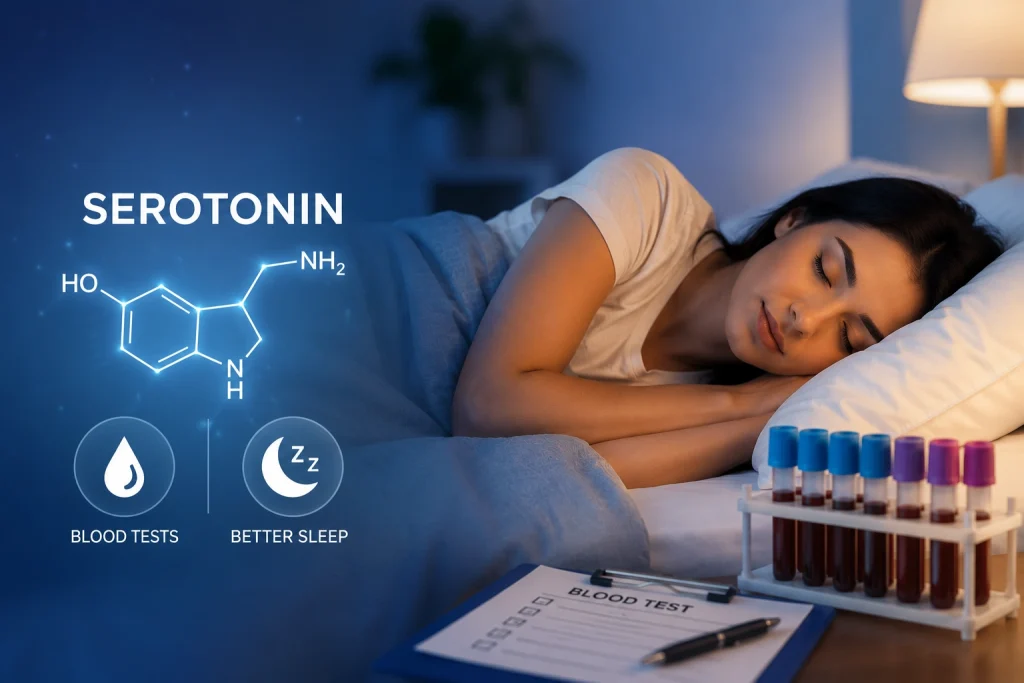
Sleep is essential for physical health, mental wellbeing, and overall quality of life. Yet millions of people struggle with insomnia, disrupted sleep, and chronic fatigue without fully understanding the underlying cause.
Recent research has highlighted the important connection between Serotonin Tests and Sleep Disorders, offering healthcare professionals valuable insights into the biological factors that influence sleep quality. While sleep disorders are often associated with lifestyle habits and stress, hormonal and neurotransmitter imbalances can also play a significant role.
At MDX Victoria, we offer comprehensive health assessments and blood testing services that can help identify underlying factors contributing to poor sleep and fatigue.
Understanding Serotonin and Sleep
To understand the relationship between Serotonin Tests and Sleep Disorders, it is important to first understand the role serotonin plays in the body.
Serotonin is a neurotransmitter that helps regulate:
- Mood
- Emotional wellbeing
- Appetite
- Memory
- Sleep-wake cycles
Serotonin acts as a precursor to melatonin, the hormone responsible for regulating the body’s natural sleep cycle.
Healthy serotonin levels contribute to:
- Falling asleep more easily
- Maintaining deep sleep
- Supporting normal sleep architecture
- Promoting restorative sleep
When serotonin levels become imbalanced, sleep quality may be affected significantly.
How Serotonin Influences Sleep Disorders
Research suggests that serotonin plays an essential role in regulating the transition between wakefulness and sleep.
Low serotonin levels have been associated with:
- Insomnia
- Difficulty falling asleep
- Frequent nighttime awakenings
- Poor sleep quality
- Daytime fatigue
Understanding the connection between Serotonin Tests and Sleep Disorders can help healthcare professionals identify whether neurotransmitter imbalances may be contributing to ongoing sleep issues.
Common Symptoms of Sleep Disorders
Sleep disorders affect people differently, but common symptoms include:
- Difficulty falling asleep
- Waking frequently during the night
- Early morning waking
- Excessive daytime sleepiness
- Chronic fatigue
- Poor concentration
- Mood changes
- Reduced productivity
If these symptoms persist, professional evaluation may be beneficial to determine underlying causes.
How Serotonin Tests and Sleep Disorders Are Connected
One of the emerging areas of sleep medicine involves investigating biological markers that may contribute to poor sleep.
Serotonin Tests and Sleep Disorders are increasingly discussed because blood tests can provide additional information about physiological factors that may affect sleep regulation.
While serotonin testing alone cannot diagnose a sleep disorder, it may help identify biochemical imbalances that warrant further investigation or treatment.
Blood Tests Used to Investigate Sleep Disorders
In addition to serotonin testing, healthcare providers may recommend several other blood tests when evaluating sleep concerns.
Thyroid Function Tests
Thyroid disorders can significantly affect sleep quality.
Blood tests may measure:
- Thyroid Stimulating Hormone (TSH)
- Free T4
- Free T3
An underactive or overactive thyroid can contribute to:
- Insomnia
- Fatigue
- Anxiety
- Restlessness
Melatonin Assessment
Melatonin plays a critical role in regulating circadian rhythms.
Abnormal melatonin production may contribute to:
- Delayed sleep onset
- Shift work sleep disorder
- Jet lag
- Circadian rhythm disruptions
When investigating Serotonin Tests and Sleep Disorders, melatonin levels may also be considered because serotonin is required for melatonin production.
Iron and Ferritin Testing
Iron deficiency has been linked to:
- Restless Legs Syndrome (RLS)
- Sleep disturbances
- Fatigue
Iron studies and ferritin testing may be useful when evaluating chronic sleep problems.
Vitamin D and B12 Testing
Deficiencies in Vitamin D and Vitamin B12 may contribute to:
- Poor sleep quality
- Fatigue
- Mood changes
- Reduced energy levels
Diagnosing Sleep Disorders
A complete sleep assessment typically includes:
- Medical history review
- Symptom evaluation
- Lifestyle assessment
- Physical examination
- Blood testing
- Sleep studies when necessary
Understanding the relationship between Serotonin Tests and Sleep Disorders can provide valuable information as part of a broader diagnostic approach.
Treatment Options for Sleep Disorders
Treatment depends on the underlying cause and severity of symptoms.
Lifestyle Modifications
Simple lifestyle changes can significantly improve sleep quality.
These include:
- Maintaining a consistent sleep schedule
- Limiting caffeine intake
- Reducing screen exposure before bed
- Increasing daytime physical activity
- Improving sleep hygiene
Addressing Underlying Deficiencies
If blood tests reveal nutrient deficiencies or hormonal imbalances, targeted treatment may help improve sleep quality.
Examples include:
- Iron supplementation
- Vitamin D replacement
- Vitamin B12 supplementation
- Thyroid treatment when indicated
Medical Management
In some cases, healthcare professionals may recommend medications or specialist referrals for more complex sleep disorders.
Selective Serotonin Reuptake Inhibitors (SSRIs) and other medications may be considered when serotonin-related conditions are contributing to sleep disruption.
How MDX Victoria Can Help
At MDX Victoria, we provide comprehensive diagnostic services to help patients understand the factors affecting their sleep and overall wellbeing.
Our services include:
- Private GP consultations
- Comprehensive blood testing
- Hormone assessments
- Thyroid function testing
- Nutritional screening
- General health checks
Our experienced clinicians can help determine whether underlying medical conditions may be contributing to poor sleep quality.
When Should You Seek Help for Sleep Problems?
You should consider professional assessment if you experience:
- Insomnia lasting more than a few weeks
- Persistent daytime fatigue
- Frequent nighttime awakenings
- Difficulty concentrating
- Mood changes related to poor sleep
- Reduced quality of life due to sleep issues
Early assessment can help identify underlying causes and improve treatment outcomes.
Conclusion
Understanding the connection between Serotonin Tests and Sleep Disorders offers valuable insight into the biological mechanisms that influence sleep quality. While serotonin testing is only one part of a comprehensive assessment, it can contribute to identifying factors that may be affecting sleep patterns, mood, and overall wellbeing.
Combined with other blood tests and clinical evaluation, investigating serotonin levels may help healthcare professionals develop personalised treatment plans that improve sleep quality and long-term health.
If you are struggling with insomnia, chronic fatigue, or disrupted sleep, the team at MDX Victoria can help you explore potential underlying causes and identify the most appropriate path forward.
Frequently Asked Questions
Can a serotonin blood test diagnose a sleep disorder?
No. A serotonin blood test cannot diagnose a sleep disorder on its own, but it may provide useful information about neurotransmitter balance and overall health.
What blood tests are useful for sleep problems?
Common tests include thyroid function tests, iron studies, ferritin, Vitamin D, Vitamin B12, and other investigations that may identify contributing health conditions.
Can low serotonin cause insomnia?
Research suggests that serotonin plays an important role in sleep regulation, and low serotonin levels may contribute to insomnia and poor sleep quality.
Should I have blood tests if I have chronic fatigue?
Yes. Blood testing can help identify medical conditions, nutrient deficiencies, and hormonal imbalances that may contribute to both fatigue and sleep problems.
References
- Sleep Foundation.
- Journal of Clinical Sleep Medicine.
- Journal of Psychiatry and Neuroscience.
- PubMed Database.
- National Institutes of Health (NIH) Sleep Research.