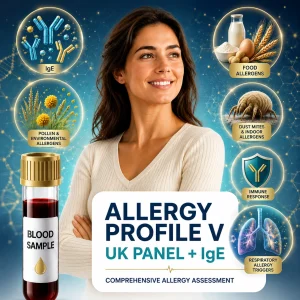


Allergy Screening Baseline Panel
£155.00
Allergy Basic Profile – Allergy Screening Blood Test in London
The Allergy Basic Profile is a comprehensive allergy blood test designed to help identify common environmental and food allergens that may be responsible for allergic symptoms. By measuring specific Immunoglobulin E (IgE) antibodies, this profile helps assess allergic sensitisation and supports the investigation of symptoms such as sneezing, nasal congestion, itchy eyes, skin reactions, asthma, digestive discomfort, and other allergy-related conditions. Ideal for individuals seeking an initial allergy assessment, this test provides valuable information to support diagnosis, treatment planning, and lifestyle adjustments. Available at Medical Diagnosis Victoria (MDX Victoria) in London, with results typically available within 5 days.
Allergy Basic Profile
The Allergy Basic Profile helps identify which allergens may be responsible for your symptoms, helping you make informed decisions about treatment, lifestyle changes, and symptom management. This blood test measures specific Immunoglobulin E (IgE) antibodies linked to common environmental and food allergens.
📊 Test Specifications




Who Is The Allergy Basic Profile Suitable For?
Symptom Indicators
The Allergy Basic Profile may be helpful if you experience:
- Sneezing, blocked nose, or hay fever symptoms
- Itchy, watery eyes
- Wheezing, coughing, or asthma-like symptoms
- Skin rashes, eczema, or unexplained itching
Exposure Factors
Further environmental factors captured by the profile:
- Digestive discomfort after certain foods
- Reactions to pets, dust, pollen, or mould
- Ongoing allergy symptoms without a known trigger
- Seasonal symptoms that return every year
Why Testing Is Helpful
Identifying your allergy triggers may help you:
- Understand unexplained symptoms and reduce uncertainty
- Reduce exposure to allergens and improve symptom control
- Support eczema or asthma management pathways
- Identify possible food triggers and guide doctor discussions
Schedule Your Allergy Basic Profile
Map your biological triggers cleanly. Secure an appointment with our clinical team for a rapid, gentle blood draw today.
What Happens During Your Appointment?
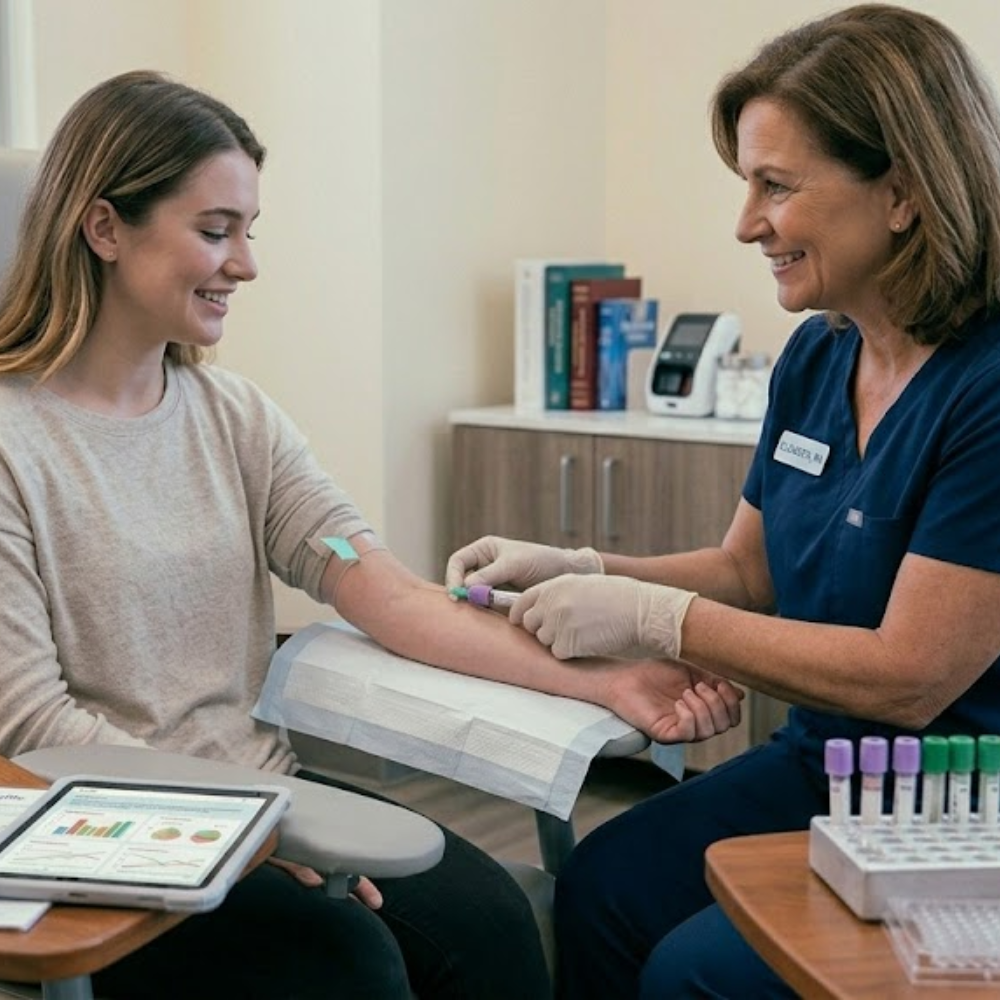
Your appointment is simple and usually takes only a few minutes. During your visit, a healthcare professional will confirm your details and explain the Allergy Basic Profile parameters. A small blood sample will be taken from your arm, and the sample is sent to the laboratory for analysis. You can return to normal daily activities immediately afterwards. No fasting is usually required unless advised otherwise.
What Allergens Are Included?
The Allergy Basic Profile tests for 30 common allergens associated with respiratory, skin, and food-related allergies.
House Dust Mites
House dust mites are microscopic organisms commonly found in bedding, carpets, and soft furnishings. They are one of the most common causes of indoor allergies.
Sneezing, nasal congestion, asthma symptoms, or itchy skin or eczema flare-ups.
Pet Allergens
Proteins found in pet skin cells (dander), saliva, and fur can trigger allergic reactions.
Sneezing, itchy eyes, wheezing, or skin irritation.
Dairy & Egg Components
Food allergies can range from mild sensitivity to more significant immune reactions. These components help identify reactions to milk proteins and egg elements linked with allergies.
Tingling or itching in the mouth, swelling, skin reactions, stomach discomfort, nausea, diarrhoea, or breathing symptoms.
Nuts, Grains & Other Foods
Evaluates specific antibody links to common staple grains, legumes, meats, and cacao elements.
Tingling/itching in mouth, swelling, skin reactions, stomach discomfort, nausea, diarrhoea, or breathing symptoms.
Fruit & Vegetables
Maps targeted system antibody profiles against dietary tomato, carrot, apple, and citrus core groups.
Tingling/itching in mouth, swelling, skin reactions, stomach discomfort, nausea, diarrhoea, or breathing symptoms.
Pollen & Mould Allergens
Seasonal pollens are a common trigger for hay fever. Certain mould spores can trigger respiratory allergies, especially in damp environments.
Sneezing, runny nose, itchy eyes, coughing, wheezing, nasal irritation, or seasonal breathing difficulties.
Cross-Reactive Carbohydrate Determinants (CCD)
The Allergy Basic Profile includes the K-202 Cross-reactive carbohydrate determinants marker. This marker helps identify whether some positive allergy results may be caused by cross-reactivity rather than a true clinical allergy. This can help improve interpretation accuracy. Total baseline Immunoglobulin E (IgE) metrics are included across the complete diagnostic profile layout.
How To Read Your Laboratory Results
Your report will show the allergens tested, your IgE antibody levels, and whether a result is negative, low, moderate, or high. Higher IgE levels may suggest sensitisation to a particular allergen. However, a positive result does not always mean you will experience symptoms, which is why clinical interpretation is important. Your results should always be considered alongside your symptoms, medical history, timing of reactions, and exposure patterns.
Results Timeline: Profile metrics are typically available within 5 days. Once your results are ready, they will be securely shared with you.
Can I see a GP to discuss my results?
If you would like help understanding your results, consultation options are fully available. A healthcare professional can help explain your allergy profile, discuss possible triggers, review symptoms, and recommend structured lifestyle adjustments. Where appropriate, access to a Private GP is available to discuss specific treatment options or prescribe medication if clinically suitable.
Frequently Asked Questions
Most Searched Online Questions About Allergies
Related Health Categories
Ready to Isolate Your Triggers?
Take immediate control of your lifestyle pathway today. Arrange a precise, irritation-free Allergy Basic Profile screening matrix at our premium clinic spaces.