

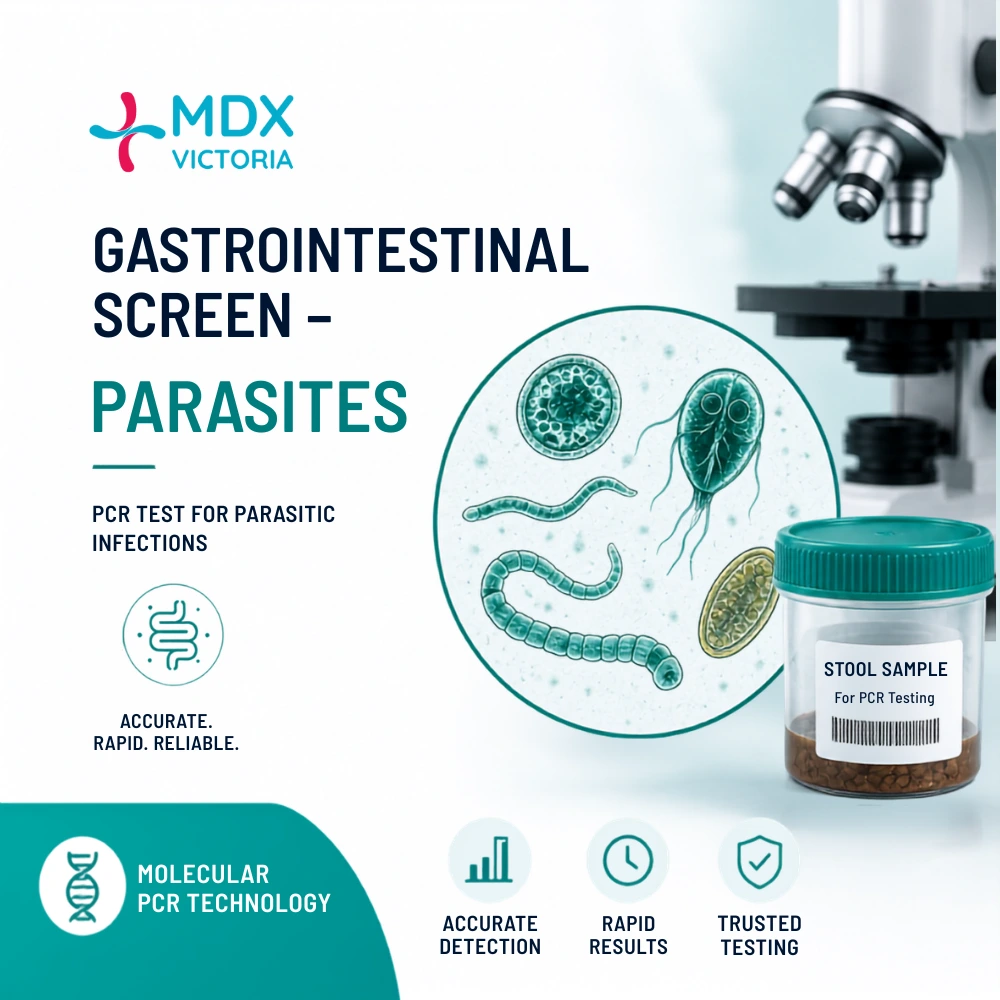
Gastrointestinal Screen – Parasites
£76.00
The Gastrointestinal Screen – Parasites (SH23) is a stool PCR test that detects the genetic material of six common intestinal parasites, including Giardia lamblia, Cryptosporidium, and Entamoeba histolytica. This advanced gastrointestinal parasite screen supports the investigation of diarrhoea, abdominal pain, digestive upset, travel-related illness, and suspected parasitic infections. Available at Medical Diagnosis Victoria (MDX Victoria) in London, results are typically delivered within 6 days from a faeces sample.
Gastrointestinal Screen – Parasites
The Gastrointestinal Screen – Parasites (SH23) uses PCR technology to detect genetic material from parasitic organisms in a stool sample, supporting rapid and specific investigation of diarrhoea, abdominal pain, and suspected intestinal parasitic infection.
📊 Test Specifications




Why Choose This Test?
Parasite PCR Investigation
This test supports investigation of:
- Diarrhoea or persistent loose stools
- Abdominal pain or cramping
- Suspected parasitic infection
- Intestinal infection after exposure risk
Rapid Molecular Detection
PCR technology helps identify:
- Genetic material from parasites
- Protozoal intestinal pathogens
- Parasite-associated gastrointestinal infection
- Pathogens that may be difficult to confirm clinically
Diagnosis & Monitoring Support
Results may help clinicians:
- Support diagnosis of intestinal parasitic infection
- Guide further clinical evaluation
- Monitor ongoing gastrointestinal concerns
- Inform appropriate next steps and treatment discussion
Schedule Your Gastrointestinal Parasite Screen
Investigate digestive symptoms and suspected intestinal parasitic infection with a focused stool PCR profile.
What Is Included?
This gastrointestinal parasite PCR screen detects six parasite-associated organisms in a faeces sample.
Protozoal Parasites
Screens for common protozoal organisms associated with intestinal symptoms and parasitic infection.
Waterborne & Foodborne Parasites
Includes organisms often considered in gastrointestinal illness following contaminated food, water, or exposure risk.
PCR Stool Screen
A molecular faeces test designed to identify parasite genetic material quickly and specifically.
Understanding Gastrointestinal Parasite PCR Testing
PCR testing detects genetic material from parasite-associated organisms in stool. Results should be interpreted alongside symptoms, medical history, travel or exposure history, clinical examination, and any additional laboratory findings.
How To Read Your Laboratory Results
Your report will indicate whether parasite genetic material was detected for each organism included in the panel. A detected result should be reviewed with a healthcare professional for clinical interpretation and appropriate next steps.
Results Timeline: Results are typically available within 6 days.


Need Help? Private GP Consultations
If you have questions about digestive symptoms, exposure risk, or stool PCR results, we offer Private GP consultations. A doctor can review your report and discuss suitable next steps.
Frequently Asked Questions
Most Searched Online Questions About Gastrointestinal Parasite PCR Testing
Related Health Categories
Ready to Investigate Digestive Symptoms?
Arrange a Gastrointestinal Screen – Parasites PCR test to support rapid identification of parasite-associated intestinal infections.