
Full Biochemistry & Haematology Profile
£72.00
The Full Biochemistry & Haematology Profile (SP14) is a comprehensive health screening blood test that provides an in-depth assessment of both organ function and blood health. This profile evaluates liver and kidney function, blood sugar levels, cholesterol, electrolytes, minerals, iron status, and key haematology markers including red blood cells, white blood cells, and platelets. Ideal for routine health checks, preventive screening, and monitoring overall wellbeing, it offers a detailed overview of metabolic, immune, and cardiovascular health. Available at Medical Diagnosis Victoria (MDX Victoria) in London, with results typically available within 4 hours.
Full Biochemistry & Haematology Profile
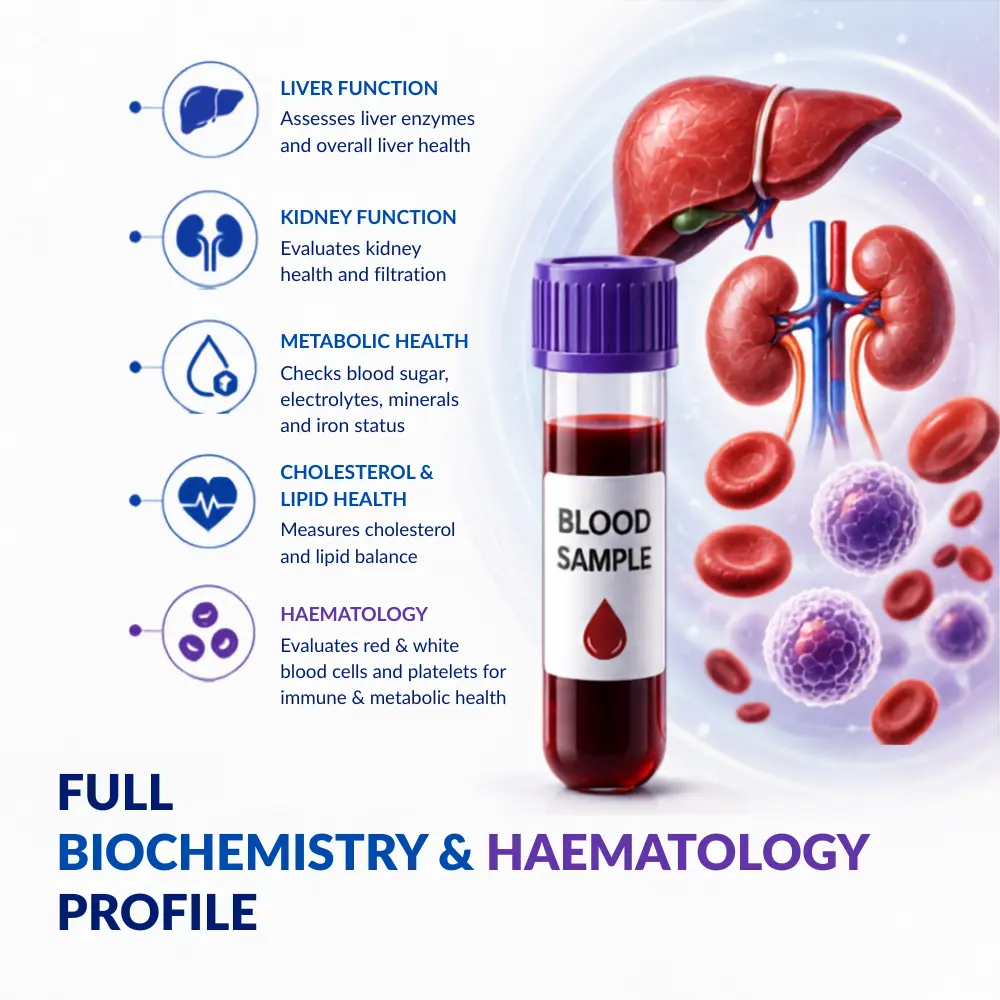
This profile (SP14) provides a comprehensive assessment of overall health by combining a detailed evaluation of blood and organ function. The biochemistry component checks liver and kidney function, blood sugar, electrolytes, minerals, iron status, and cholesterol. The haematology component evaluates red blood cells, white blood cells, and platelets for a complete picture of your immune and metabolic health.
📊 Test Specifications




Why Choose This Test?
Comprehensive Health Monitoring
This profile provides essential clarity if you are seeking:
- A routine annual check-up
- Early signs of metabolic disorders
- Cardiovascular and organ health assessment
- Investigation of unexplained fatigue or weakness
Dual-Focus Diagnostics
It goes beyond a basic check-up by combining:
- Detailed liver and kidney function tests
- Full cholesterol profile and blood sugar
- Vital electrolytes, minerals, and iron
- Full Blood Count with differential
Actionable Insights
This detailed internal view empowers you to:
- Assess overall organ functionality
- Monitor long-term cardiovascular risk
- Check immune responses and clotting potential
- Take control of your health with clear data
Schedule Your Full Biochemistry & Haematology Profile
Map your blood and metabolic health clearly. Secure an appointment with our clinical team for a rapid, gentle blood draw today.
What Is Included?
This profile provides a broad panel of over 25 markers evaluating your liver, kidneys, heart, blood cells, minerals, and complete blood chemistry.
Liver, Kidney & Metabolism
Evaluates key organ functionality, enzyme production, and core metabolic processes including blood sugar.
Checking kidney waste filtration, liver enzyme health, and screening for diabetes or gout risk.
Heart, Minerals & Muscles
Details your cholesterol breakdown, electrolytes, minerals, and markers linked to muscle damage.
Assessing cardiovascular health, bone health, hydration status, and muscle exertion recovery.
Haematology & Inflammation
Evaluates red and white blood cells and general inflammatory responses in the body.
Detecting anaemia, immune changes, clotting ability, and systemic inflammation.
Why Complete Profiling Matters
The Full Biochemistry & Haematology Profile evaluates your blood cells alongside the chemicals and enzymes they transport. Combining these metrics provides a comprehensive overview, supporting detection of nutritional deficiencies, early organ stress, metabolic risk factors, and inflammatory changes.
How To Read Your Laboratory Results
Your results will list your values alongside standard reference ranges. If a result falls outside the range, it is noted for review. A single out-of-range value does not automatically indicate a medical problem and should be assessed alongside your medical history and clinical examination.
Results Timeline: Results are typically available within 4 hours.
Need Help? Private GP Consultations
If you have questions about your comprehensive results, we offer Private GP consultations. A doctor can review your report and discuss next steps for maintaining or improving your organ, blood, and metabolic health.
Frequently Asked Questions
Most Searched Online Questions About Full Health Profiles
Related Health Categories
Ready to Check Your Complete Health?
Take control of your health pathway today. Arrange a precise Full Biochemistry & Haematology Profile screening at our premium clinic spaces.