
Coagulation Profile 2
£63.00
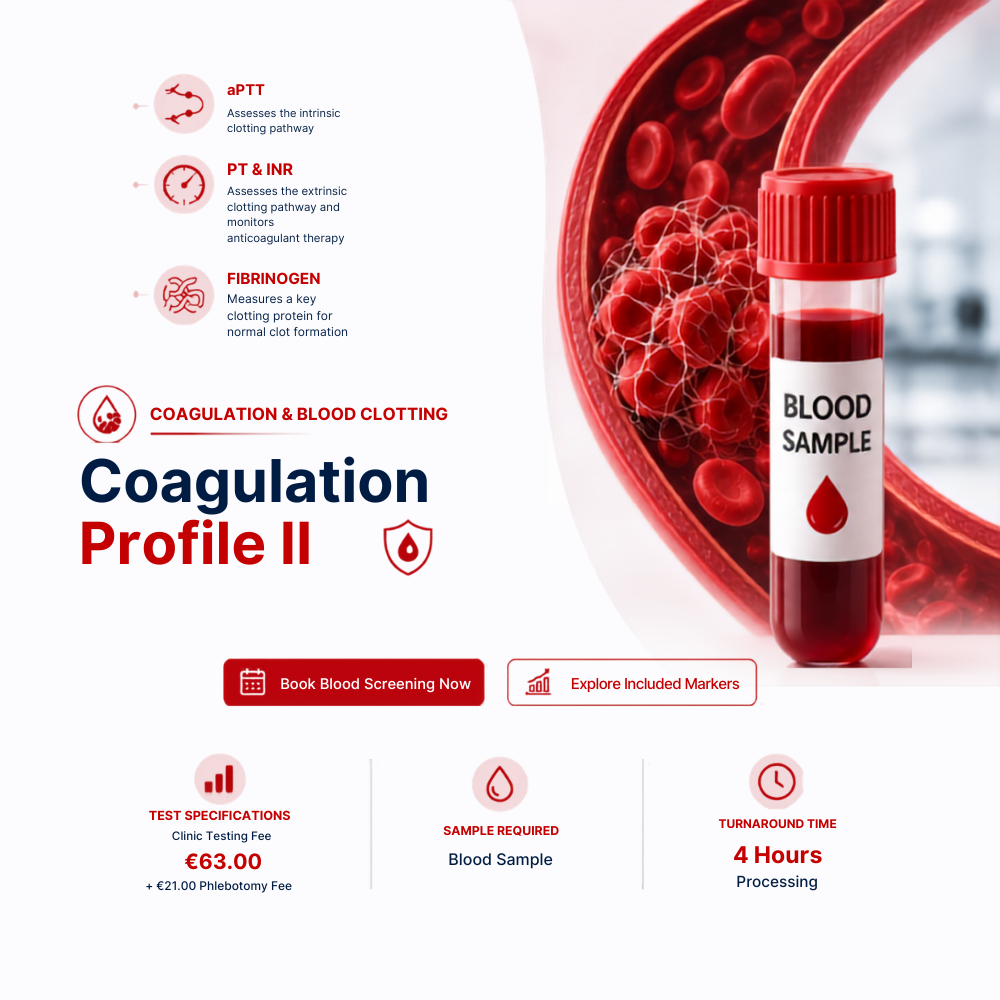
The Coagulation Profile II (SP37) is a comprehensive blood clotting test that evaluates your body’s ability to form and regulate blood clots. This profile includes Prothrombin Time (PT), International Normalised Ratio (INR), Activated Partial Thromboplastin Time (aPTT), and Fibrinogen levels to assess clotting function, investigate bleeding or clotting disorders, and monitor anticoagulant therapy. Available at Medical Diagnosis Victoria (MDX Victoria) in London, with rapid results typically available within 4 hours.
Coagulation Profile II
This profile (SP37) provides a thorough assessment of your blood’s ability to clot. The aPTT test evaluates one clotting pathway, while Prothrombin Time (PT) and INR assess another pathway and are often used to monitor anticoagulant therapy. Fibrinogen, a key clotting protein, is measured to check whether your body has sufficient components for normal clot formation.
📊 Test Specifications




Why Choose This Test?
Clinical Application
This profile provides essential clarity if you need help:
- Detecting bleeding or clotting disorders
- Monitoring blood-thinning treatment
- Evaluating clotting function before surgery
- Assessing cardiovascular and liver health links
Targeted Biomarkers
It evaluates both main coagulation pathways by combining:
- Prothrombin Time (PT)
- International Normalized Ratio (INR)
- Activated Partial Thromboplastin Time (aPTT)
- Fibrinogen structural protein levels
Actionable Insights
This detailed internal view empowers you to:
- Safely manage daily anticoagulant dosages
- Prepare effectively for surgical procedures
- Identify hidden clotting pathway issues
- Take control of your cardiovascular health
Schedule Your Coagulation Profile II
Map your blood’s clotting ability clearly. Secure an appointment with our clinical team for a rapid, gentle blood draw today.
What Is Included?
This profile evaluates both distinct pathways of the coagulation cascade and the final structural components necessary for normal blood clotting.
Prothrombin Time & INR
Assesses the extrinsic pathway of coagulation, frequently used to monitor the effectiveness of blood-thinning medications like Warfarin.
Monitoring anticoagulant therapy stability and evaluating liver synthesis function.
Activated Partial Thromboplastin Time
Evaluates the intrinsic and common pathways of the coagulation cascade, helping to detect specific bleeding disorders.
Identifying deficiencies in specific clotting factors and monitoring alternative medical therapies.
Fibrinogen Levels
Measures a key protein synthesised by the liver that is converted into fibrin to form the structural mesh of a blood clot.
Checking whether your body has sufficient components for normal and stable clot formation.
Understanding Coagulation Pathways
Blood clotting is a complex cascade mechanism. The aPTT test evaluates one clotting pathway, while Prothrombin Time (PT) and INR assess another pathway. By running these alongside fibrinogen measurement, doctors receive a comprehensive overview of how quickly and effectively your blood forms necessary clots.
How To Read Your Laboratory Results
Your results will list your values alongside standard reference ranges. If a result falls outside the range, it is noted for review. Important: A single out-of-range value does not automatically indicate a medical problem. Results must be assessed in conjunction with your medical history and clinical examination.
Results Timeline: Profile metrics are typically available within 4 hours. Once your results are ready, they will be securely shared with you.
Need Help? Private GP Consultations
If you have questions about your coagulation results, we offer Private GP consultations. A doctor can review your report, explain what the numbers mean for your specific situation, and discuss the best next steps for managing your cardiovascular health or preparing for surgery.
Frequently Asked Questions
Most Searched Online Questions About Blood Clotting
Related Health Categories
Ready to Check Your Blood Health?
Take immediate control of your health pathway today. Arrange a precise, comprehensive Coagulation Profile II screening at our premium clinic spaces.