
Acquire clear, definitive diagnostics of your reproductive health. Our specialist private screening suite provides non-invasive evaluation loops tracking uterine structures, endometrial thicknesses, and ovarian margins under full clinical confidentiality with zero referral documents required from your GP.
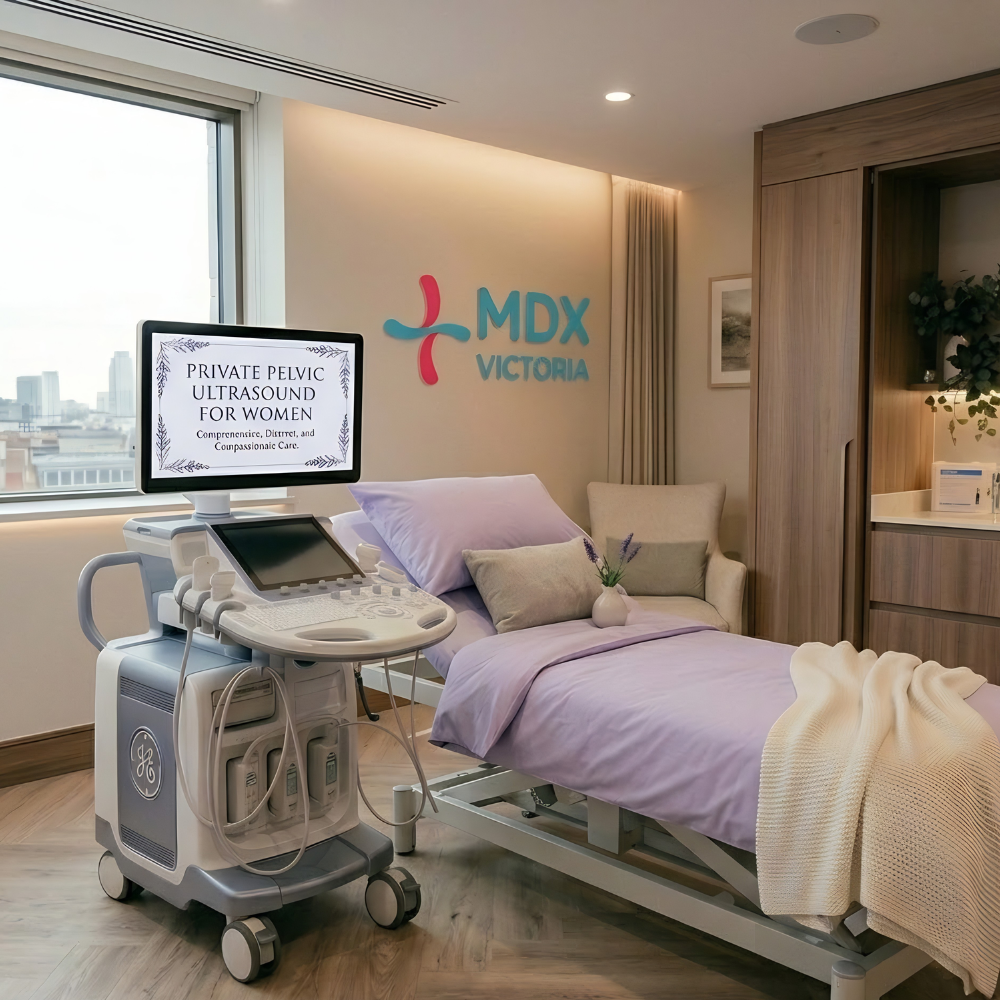
A pelvic ultrasound is a non-invasive, radiation-free medical imaging sequence that evaluates the absolute baseline structures of the female lower abdomen. It details the dimensions of your uterus, maps the thickness of the endometrium margins, checks the structural layout of both ovaries, and detects localized fluid collections or unexpected deep pelvic developments.
This scanning profile tracks specific biomedical markers to pinpoint the source of irregular clinical concerns. It evaluates systemic anomalies connected to localized chronic pelvic pain, unexpected menstrual bleeding variances, ovarian cysts, fibroid positions, and signs associated with Polycystic Ovary Syndrome (PCOS).
You should secure a private pelvic ultrasound loop immediately if you encounter persistent pelvic pain, cycle irregularities, or bloating thresholds that warrant evaluation. It also serves as a critical tracking matrix if you are actively navigating comprehensive fertility monitoring loops or checking coil placements (IUD).
Our expert clinical sonographers isolate multiple key structural layouts during your imaging session to deliver comprehensive diagnostic visibility.
Traces global dimensions and structural variations. Maps matching endometrial line layouts to assess fertility preparation cycles or unexpected post-menopausal spotting indicators.
Visualizes both ovaries to cross-examine functional follicle developments, detect hidden fluid pockets, or isolate deep follicular arrays linked to PCOS configurations.
Pinpoints the precise coordinates, volume metrics, and circulatory supply lines of benign fibroid formations, structural polyps, or localized clear ovarian cysts.
Acts as a continuous tracking tool for prospective reproductive strategies while verifying that intrauterine loops are safely resting inside the central uterine frame.
Clear, direct, and uncompromised medical answers mapping out every common clinical question regarding private pelvic evaluations.
Support your fertility strategy, check family health metrics, or solve pelvic pain concerns with high-resolution clinical data fields. Same-day appointments available Monday through Saturday with zero waiting list delays.
Book Private Session NowClinical governance notification: Pelvic ultrasound imaging configurations and scanning data metrics provided across this interface serve baseline tracking and educational guidance workflows. Every pathology validation output must be cross-examined by a certified specialist loop alongside historical medical parameters, tracking blood markers, and localized physical assessments.